- Jan 12
Follicles, Fibres & Myths: Why Texture Isn’t Determined by Appearance
The Fundamentals Series
Stylists often look at a head of hair and assume the visible look tells the whole story—but appearance can mislead. The follicle and the fibre each play different roles, and confusing them is how misinformation spreads.
This part breaks it down clearly.
1. The Follicle Shapes the Curl — But Not the Texture Profile
Follicle determines:
The angle the hair exits the scalp
The curve or straightness of the strand
The pattern (waves, coils, spirals, zigzags)
Follicle does not determine:
Strand width
Porosity
Elasticity
Density distribution
Strength potential
Ability to hold moisture
Ability to grow long
Those come from the fibre’s internal structure, not the follicle origin.
2. Appearance Is NOT a Reliable Indicator of Strength or Fragility
A tight coil is not inherently fragile.
A straight strand is not automatically strong.
Fine afro strands break just as easily as fine straight strands.
Coarse afro strands can be incredibly strong and resilient.
Medium strands behave differently under tension than either extreme.
What actually matters:
The hair’s keratin structure
How many twists occur along the shaft
The cuticle thickness
The level of hydration
The pattern of wear and tear from styling choices
The eye cannot see all that.
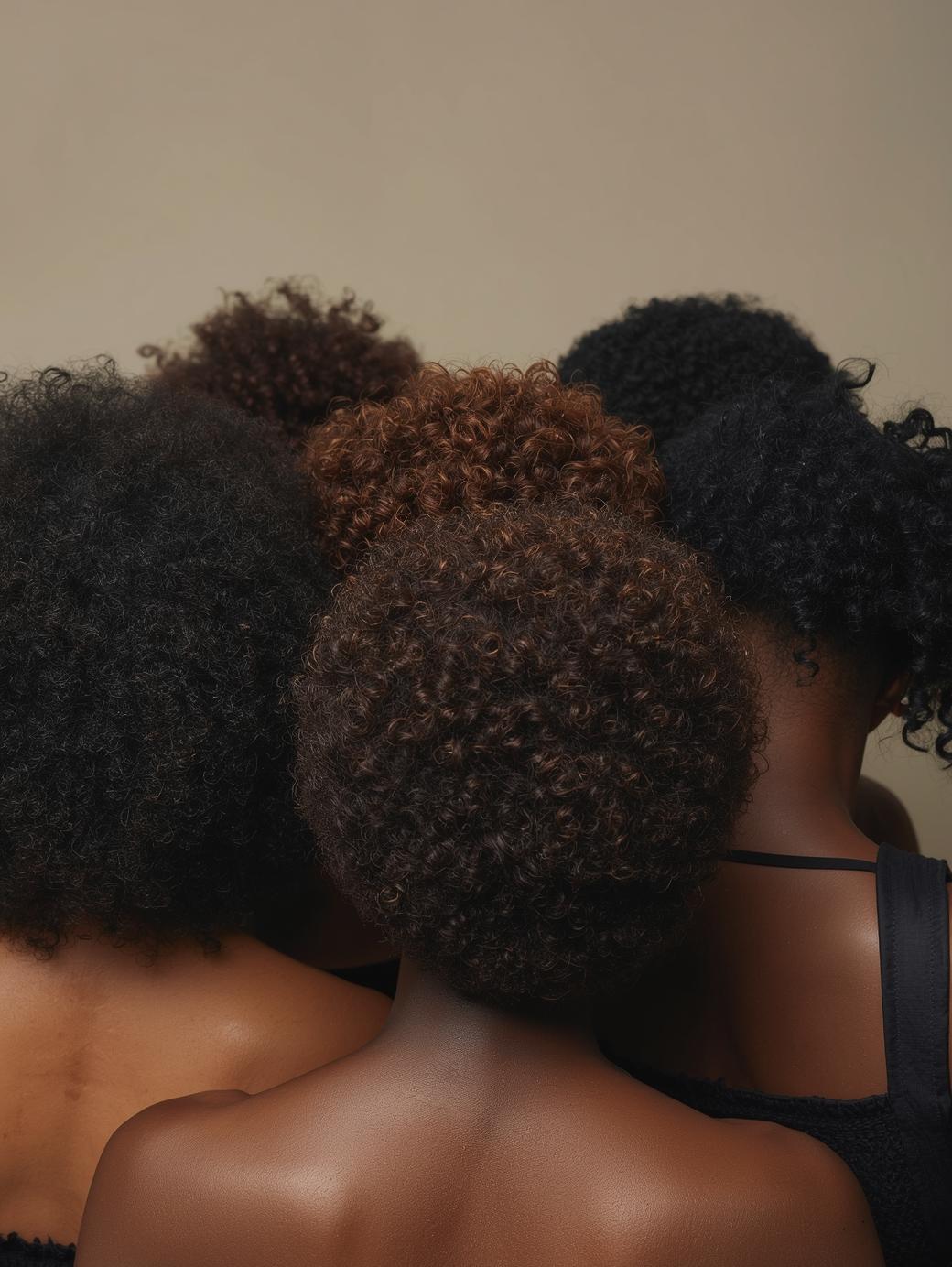
3. Why Stylists Overestimate Fragility in Afro Hair
Because the bends and spirals expose the cuticle in different ways, afro hair:
Loses moisture faster
Reflects less light
Shows mechanical wear more quickly
The untrained eye misinterprets this as:
“weak,” “dry,” “difficult,” or “unmanageable.”
Actually, the hair is simply showing you exactly what it needs—moisture-smart techniques, correct tools and tension awareness.
4. Heat Dependency Comes From Skills Gaps, Not From the Hair Itself
When stylists don’t know how to:
detangle without force
hydrate effectively
section accurately
control tension
style curls in their natural state
…they rely on heat to “make the hair behave.”
But that’s not behaviour — that’s biology.
Heat is a shortcut when knowledge is missing.
And shortcuts create breakage when used excessively.
5. Fine & Coarse Afro Hair Are Most Vulnerable — But Not Because of the Curl
Fine hair: few keratin layers → heat breaks it down quickly.
Coarse hair: more keratin layers → takes longer to hydrate → heat can dry it out before moisture reaches the cortex.
Both groups experience compounded damage when heat is overused without fibre-specific strategy.
6. When Stylists Understand the Science, the Fear Drops Away
Knowledge eliminates avoidance.
Science eliminates stereotypes.
Skill eliminates fear.
And clients feel it instantly.
A stylist who understands texture from a fibre perspective changes:
how they communicate
how they section
how they cleanse
how they detangle
how they protect the hairline
how they style children safely
how they reduce cumulative damage across months and years
If you want to work with natural afro hair confidently, why not subscribe to our Curl Clarity Community and join in the discussion.