- Dec 11, 2025
Understanding Hair Structure: The Foundation of Skilled Textured-Hair Work
Every strand of hair — afro,curly, coily, wavy, straight — is built from the same anatomical structures. What differs is how those structures behave. For stylists, understanding the biology of hair offers far more clarity than relying on visual curl patterns alone.
Each hair strand is made up of the cuticle, cortex, and, in some cases, a medulla.
The cuticle is the protective outer layer. In tightly coiled hair, cuticle angles are more lifted, making it naturally more prone to dryness and friction.
The cortex, where strength and elasticity live, determines how hair responds to tension, heat, and moisture.
The medulla is often absent in fine hair and more common in coarse strands.
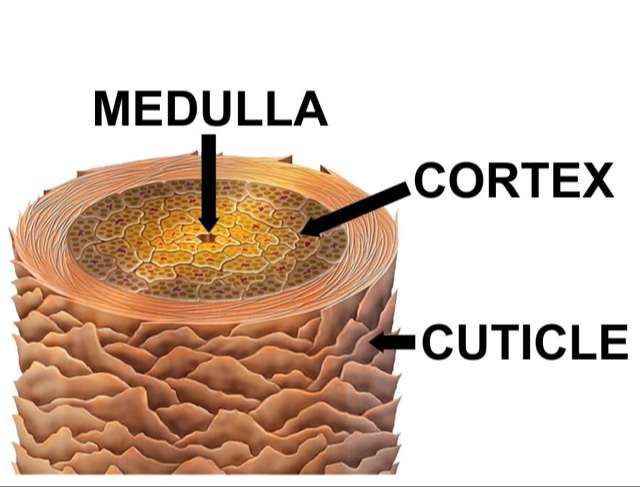
These structural differences shape everything — from porosity to how the hair absorbs water, to how it shrinks, stretches, or breaks under stress.
Afro and tightly textured hair tends to form elliptical or ribbon-like shapes, causing the strand to bend frequently. Each bend becomes a natural weak point where breakage can occur if technique isn’t adjusted. This is why stylists who understand structure instinctively modify their approach: smaller sections, controlled tension, and moisture-protective products.
A scientific understanding of structure matters because textured hair is not more delicate — it is simply different in its engineering. When stylists recognise this, their approach becomes more tailored, more confident, and more accurate.
This is the philosophy behind our training: once a stylist understands structure, every technique makes more sense. It becomes easier to spot, recognise and readily identify issues, choose suitable products, and create long-lasting styles that respect the hair’s natural architecture.
Hair structure doesn’t just explain behaviour — it predicts it. And when a stylist can predict how hair will react, they move from “hoping for the best” to working with clarity, precision, and professional confidence.
Stay up to date with new science-led articles by joining our Curl Clarity Community