Curl Clarity Community
Braiding Is Skilled Work: Reframing Value Without Shame
Braiding sits at a powerful intersection: heritage, identity, artistry, and hair science. Yet many Afro-Caribbean clients report a frustrating reality—late starts, no consultation, eating during services, and inconsistent aftercare guidance. At the same time, braiders often feel disrespected, underpaid, and pressured to work faster than is healthy for scalp comfort or long-term hair integrity.
This is not a “good client vs bad braider” conversation. It’s an industry standards conversation.
When braiding is treated like informal labour, everyone loses:
Clients lose trust, time, comfort, and sometimes hairline health.
Braiders lose revenue stability, referrals, and the ability to build a sustainable career.
Salon-based professionals withdraw from braiding because the relationship feels adversarial—clients don’t want to pay, and stylists feel unheard or forced into methods they don’t endorse.
To rebuild the profession, we do two things at once:
Honour the cultural roots of braiding, and
Operate with modern professional standards—clear systems, clean practice, consultation, punctuality, and transparent pricing.
Let’s also address the stereotype: the idea that braiding is for “unintelligent” people is a myth wrapped in classism. Braiding requires technical planning (sectioning geometry, tension distribution, durability), client communication, time management, sanitation, and business skill. That is not “less than.” That is a profession.
Professional standard (simple, not snobby):
Start times are respected.
Consultations are normal.
Hygiene is non-negotiable.
The client’s goals are heard.
The stylist’s duty of care is honoured.
When these are in place, braiding becomes what it always deserved to be: a respected craft with reliable outcomes and fair pay.
Colonial Disruption and the Hygiene Standard That Protects the Craft
Colonial influence reshaped hair economies across Africa and the diaspora—often devaluing Indigenous hair knowledge while elevating Eurocentric training models and service structures. Research on Black hair discourses notes how Western beauty standards have influenced hair preferences and perceptions over time, which can distort how communities value their own hair practices and the professionals who serve them.
Within many communities, hair also carried social and sometimes sacred meaning, which could shape norms about who was “allowed” to touch it and how. Whether every local story is historically verifiable or not, the professional principle stands: hairdressing is intimate body work. Intimacy demands ethics—and ethics must be supported by hygiene.
Does science support your “hands matter” point? Yes, with nuance. Palms don’t have sebaceous glands, but research describes a skin-surface film that can include lipids, and studies of fingermark residues note that lipids (sebum) can be present on fingertips via secondary contact (for example, touching the face or hair and then touching another surface). More importantly, hands are a primary route for transferring microorganisms between people and surfaces—which is why hand hygiene sits at the centre of infection prevention.
Professional standards in the UK reflect this duty of care. The National Hair & Beauty Federation’s code of conduct explicitly expects rigorous hygiene and cleanliness routines, including sterilising tools such as brushes and combs.
Afrotility hygiene non-negotiables :
Wash or sanitise hands between every client and after touching your phone, face, food, cash, or bins.
No eating during services (not only optics; it increases hand-to-mouth-to-client contamination risk).
Disinfect combs, brushes, clips and tools between clients; if a tool hits the floor, treat it as contaminated and disinfect before reuse.
Protect your brand: punctuality, consultation, and clean practice are part of cultural respect as much as business excellence.
Final thought: pride grows fastest where craft, culture, and clinic-level hygiene meet. Your salon or braiding business should reflect your high standards!
African Braiding: Hair as Language, Art, and Community
Across the African continent and the diaspora, braiding is far more than a hairstyle category—it is a technology, an art form, and (in many communities) a social language. Museums and scholars describe hair in African societies as carrying messages about identity: clan or ethnic affiliation, age, marital status, social rank, wealth, and religion.
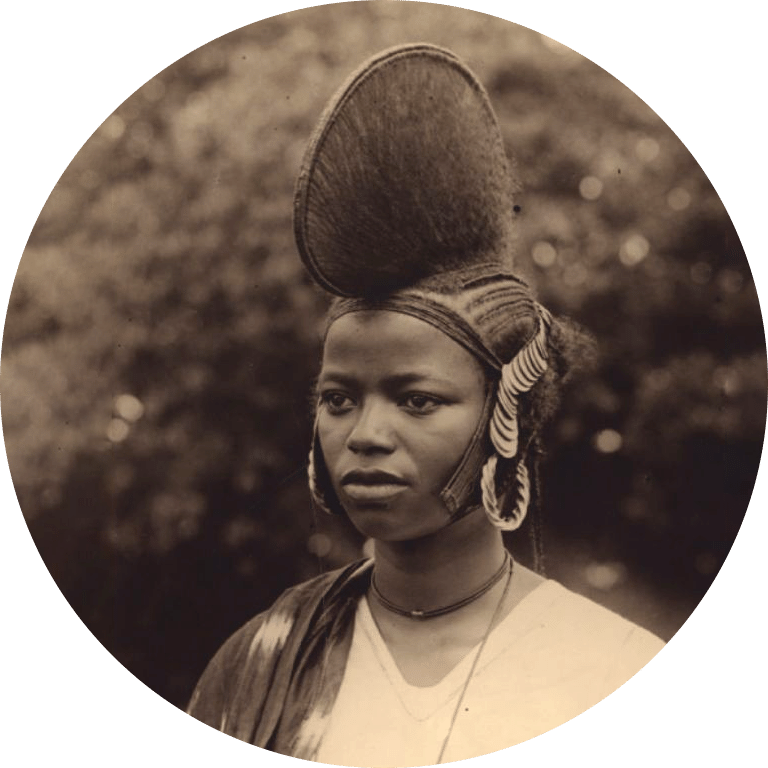
Many community histories also describe hair as spiritually significant—treated with care because it is close to the head, the self, and (in some beliefs) the sacred. Educational museum resources note traditions where hair was understood as a channel for communication with the spiritual world, which raises the cultural stakes of “who touches the hair” and how. We should be careful not to flatten this into one story, but we can honour the principle: hair work requires consent, respect, and clean hands.
That matters for professionals because braiding is not “casual work.” It is culturally literate work. The stylist isn’t only managing strands; they’re handling a client’s story and social presence. The National Museum of African American History and Culture frames Black hair as a site of identity over time, noting heritage styles repeated and adapted over millennia.
Braiding also functions as a community practice. In many households, intricate styles are created through shared time—talking, teaching, and bonding. This is why professionalism in braiding must include both technique and client care: consultations, time management, pain-free tension control, and aftercare education protect the craft’s reputation as much as they protect hair.
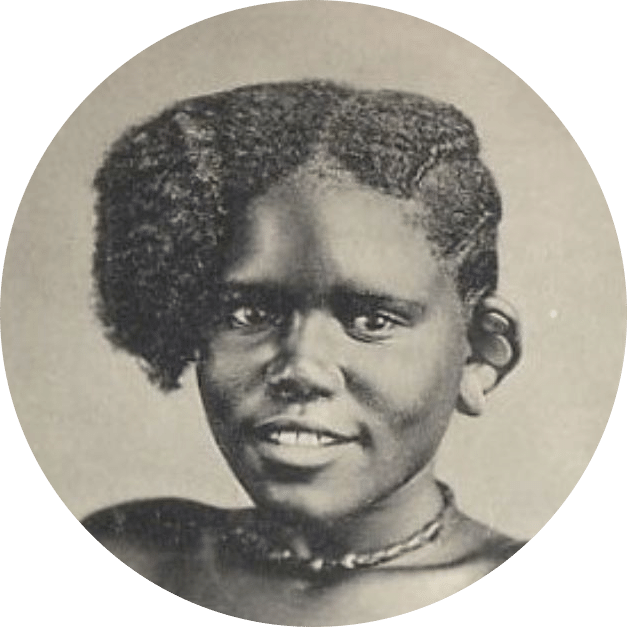
A crucial nuance and todays moment of clarity: Africa is not one hair culture. Symbols differ across regions and peoples; what is “everyday” in one community may be ceremonial in another. So the professional skill is not memorising a list of meanings—it’s learning to ask the right questions and avoiding assumptions.
Try this consultation sequence for braided styles:
“What does this style mean to you—practicality, heritage, celebration, identity?”
“How long do you need it to last, and what’s your scalp sensitivity like?”
“What’s your non-negotiable: neatness, fullness, speed, or low tension?”
When clients feel seen, they’re more willing to invest—and when stylists protect comfort and integrity, clients stop treating braiding as “cheap labour” and start treating it as skilled service.
Rome: The Salon Economy, Barbershops, and Cultus
In ancient Rome, hairdressing moved even closer to what we would recognise as “the salon economy”: specialist workers, repeat clients, trend cycles, and public spaces where grooming and social life overlapped. The Latin term for barber is tonsor, and the barbershop (tonstrina) was part service, part community noticeboard—people came not only to be groomed, but to talk, listen, and belong.
Roman sources also frame grooming under the wider idea of cultus—adornment and refinement as part of public life. That matters because hair choices were socially loaded: cut, beard style, and finish could signal age, status, and “respectability,” which is why routines became habitual and why clients returned again and again. Even without modern media, fashion circulated—hairstyles evolved, and skilled hands kept up with demand.
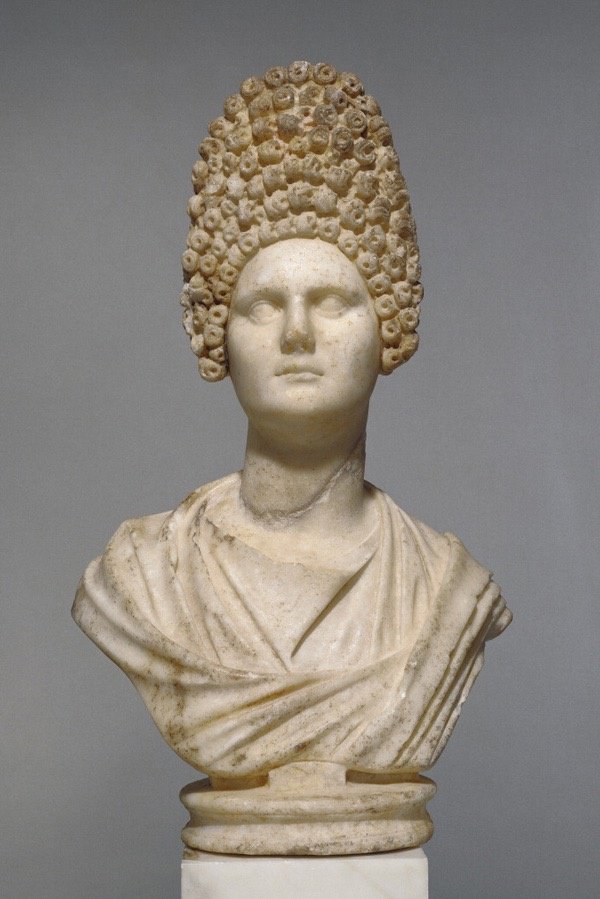
Rome illustrates a clear division of labour in hair services. For men, the tonsor cut hair and shaved beards, often from a street-side shop. For women in elite households, the ornatrix (often a domestic worker) could create intricate styles and manage adornment, using oils and preparations to manipulate shine and set. Whatever your view of the social hierarchy, the professional point is clear: technical skill was valued, and hair work was a recognised role with its own tools, techniques, and expectations.
A key teaching moment for today’s stylists is how Roman grooming blurred “hair” and “personal care.” Sources describe barbers doing more than cutting and shaving—trimming nails and offering other grooming services. That overlap is why hygiene and boundaries matter so much in modern practice: whenever tools or hands move between hair, skin, and scalp, infection-control standards become non-negotiable.
Moment of clarity: Rome reminds us that a salon is more than a chair—it’s a social contract. Clients are paying for results and for respect: punctuality, consistency, technical excellence, and care of the body.
Ancient Greece: Hair as Social Code and Rites of Passage
If Egypt shows us haircare as an ancient craft, Greece shows us haircare as an ancient social code. In many Greek contexts, hair signalled gender expectations, social identity, and life stages. The record isn’t only about “natural hair”: ancient Greeks used cutting and grooming, but also adornment and enhancement—dyeing, decorative pieces, and hair additions that we’d recognise today as early forms of wigs and weaves.
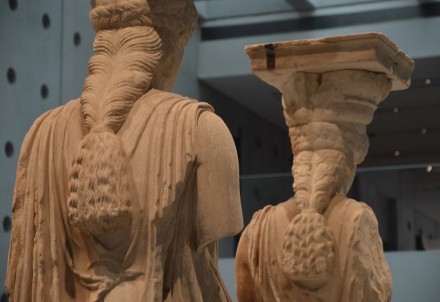
Greek hair culture is often described through rites of passage. Hairstyles could shift with marriage, adulthood, or other life transitions, and because hair was public, these changes were visible. For us, that’s a key insight: hairdressing has always been tied to transitions. We aren’t only working with fibre; we’re supporting confidence and belonging when someone feels socially “on display.”
Another professional lesson: the same technique can mean different things in different contexts. A pinned-up look might signal ceremony in one setting, or practicality in another. Cultural literacy—asking rather than assuming—is part of technical excellence.
Technically, the Greeks also remind us that heat-free technique is ancient too. Texts on classical hair practices describe methods like wrapping damp hair around a smooth stick to create corkscrew curls—an early example of controlled reshaping without modern heat tools. Add pins, ribbons, and coverings, and you see a styling culture built on tension control, setting, and finishing—skills that map neatly onto modern low-manipulation and protective thinking.
Moment of Clarity: “add-ons” are not new, but professionalism is in the safeguards. If a client is enhancing density or length (hairpieces, extensions, added hair for braids), your duty of care is to protect scalp comfort and long-term follicle health: assess sensitivity, check tension, plan parting, and teach aftercare.
Consultation prompt to trial: “What is this style for—work, ceremony, sport, travel, grief, celebration?” Build the method around the purpose, not the trend.
Ancient Egypt: The Birth Of The Hair Professional
In ancient Egypt, hair was never “just hair.” It functioned as a visible language of identity—age, social rank, gendered roles, and ritual—and that made haircare a recognised craft early on. Our best evidence comes from tomb scenes, inscriptions, surviving tools, and hairpieces (including wigs). Taken together, these sources show that hairstylists and barbers worked as established trades across long periods of Egyptian history, and that hairdressing was treated as skilled, repeatable work.
Researchers also describe both private practitioners (serving households) and state-linked roles, suggesting that hair work could be organised at multiple levels of society. This matters: it tells us that hair services were not marginal—they were part of the infrastructure of daily life and public life.
Technically, Egyptians were working with a “full kit” mindset. Combs and copper-alloy razors appear in museum collections, and written/visual sources depict repeatable practices—cutting, shaving, shaping, and maintaining hair and hairpieces. Wigs and extensions were not simply fashion statements; they were engineered adornments that could be cleaned, stored, and re-used, helping people manage hair and scalp differently across heat, dust, labour demands, and ceremonial requirements.
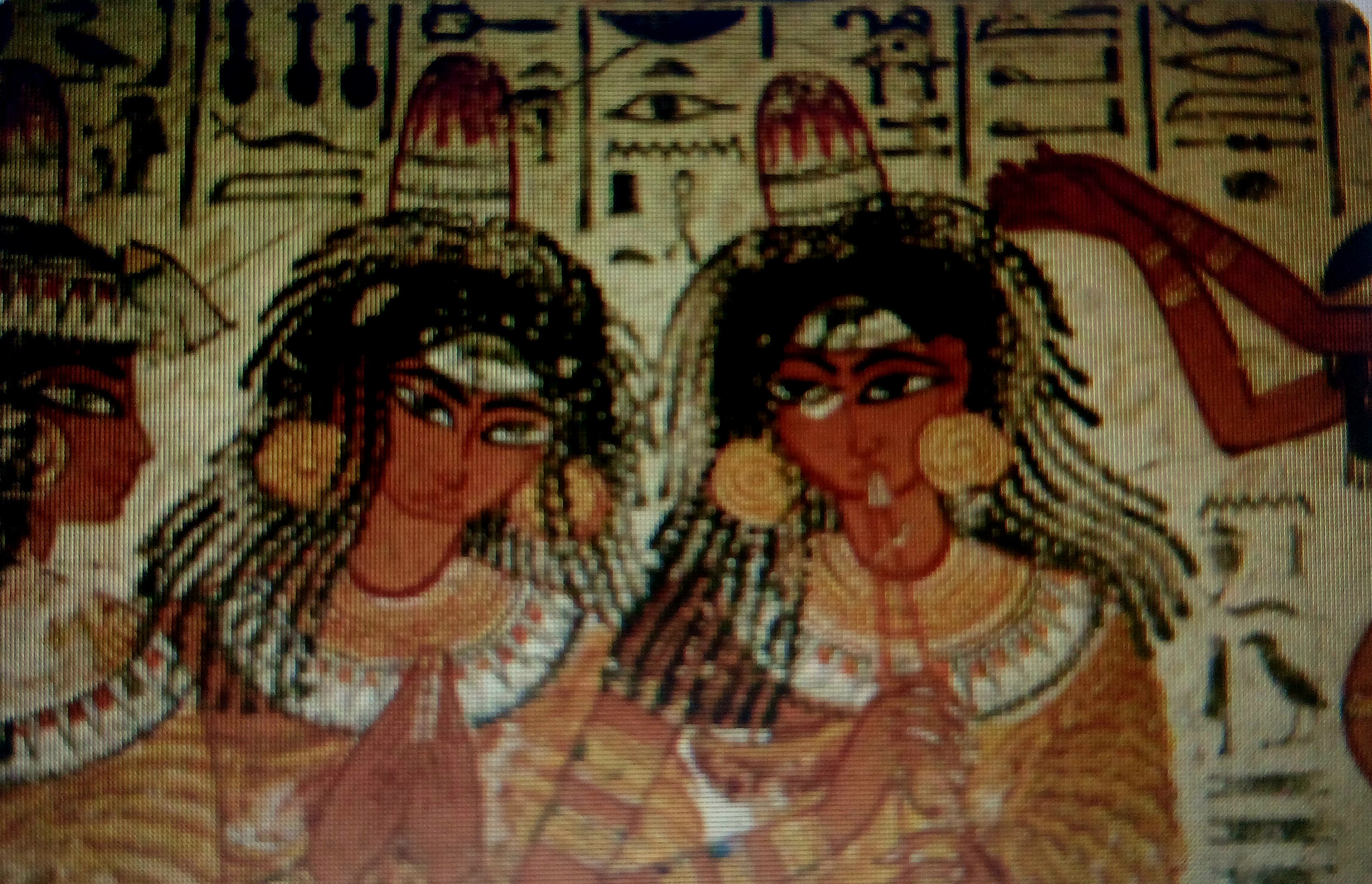
The social layer is just as important as the technical layer. Research into Egyptian hair and hairstyles links hair to identity and social groupings (men, women, children, elders), and notes how certain looks could be restricted to particular roles or offices. In a culture where hair carried spiritual and political meaning, hairdressing became intimate work: the practitioner needed skill, discretion, and the client’s trust.
Moment of curl clarity for the professional: ancient Egypt reminds us that “professional hairdressing” is not a modern Western invention—it’s an ancient, global craft rooted in technique, tools, and cultural literacy.
Micro-practice to try this week: add one question to your consultation script—“What does this style need to do for your life?”—and watch how it sharpens your choices around tension, sectioning, finish, and aftercare.
3 Mistakes Stylists Make With Afro Hair (And What Actually Works Instead)
Working with Afro-textured hair is not difficult — but working with it through reductive systems, incomplete assessments, and unclear consultations often is.
Many of the challenges professionals experience with Afro and mixed-race hair don’t come from the hair itself. They come from the frameworks we were given — and in some cases, the ones we were never given.
Here are three common mistakes stylists make with Afro hair, and what consistently produces better results instead.
Mistake #1: Classifying hair through a brand system instead of the fibre
One of the most common sources of confusion in textured hair care is referring to Afro hair primarily through a curl pattern system created to support a specific product range.
Outside of that brand context, these systems are often treated as universal classification tools — when in day-to-day professional practice, they tell us very little about what the hair actually needs.
Because regardless of ethnicity, curl shape, or appearance, human hair falls into three primary fibre categories:
Fine
Medium
Thick/coarse
And most people have a mixture.
Medium-fine. Medium-thick. Thick with finer areas at the nape. Medium overall with finer temples. This variation is not the exception — it’s the norm.
One of my clearest reminders of this came from teaching identical twins in my bespoke classes. Physically, they were indistinguishable. But when I braided and assessed their hair, it was immediately clear their fibres were different. One had fine hair. The other had medium-fine hair.
Once their routines, products, and handling were adapted to their actual fibre types, both were finally able to reach their hair goals — and the frustration they’d previously experienced disappeared.
Point of clarity:
Unless you are working directly with a specific brand of hair products, number & letter curl-typing is not a functional classification method for professionals.
Fibre assessment is.
Mistake #2: Using the same products across all clients
Another common habit is using the same core products on every client with Afro hair.
This is rarely effective — because fine, medium, and thick hair have fundamentally different physical characteristics.
They differ in:
Diameter and strength
Absorption and build-up response
Drying time
Weight tolerance
Styling longevity
When products aren’t matched to the actual fibre, problems are often created — dryness, heaviness, frizz, lack of hold, or lack of moisture — and then additional products are layered on to “fix” what was never properly addressed.
This cycle increases service time, cost, and frustration.
When products are selected based on hair thickness, density, porosity behaviour, and styling goal, routines become simpler, results improve, and both the stylist and the client experience less overwhelm.
Point Of Clarity:
Informed product selection always reduces hair damage and correction work.
Mistake #3: Skipping effective consultation and letting the style lead
A third major mistake is beginning with the style instead of the hair.
Many years ago, before I had the training I have now, I stopped a woman in the supermarket to compliment her stunning, thick, long box braids. They were beautifully executed — full, long, and absolutely holiday-ready.
I booked with the same stylist.
On the day of my appointment, she ran over time. She broke two blow-dryer picks. She used far more hair than planned. And she charged me far less than she should have.
Why?
Because there had been no structured consultation, no fibre assessment, and no clear identification of my hair type, which is medium-thick.
The style had been copied — but my hair was not the same.
Effective consultations allow us, as professionals, to:
Assess the actual fibre
Adapt styles to hair type and health
Consider the client’s lifestyle and maintenance capacity
Set realistic expectations
Structure services in a way that is both ethical and profitable
They protect the client.
And they protect the professional.
Point Of Clarity:
When pricing, timing, and physical demand are not aligned with the hair in front of us, resentment and burnout quietly follow — and neither belongs in a sustainable career.
The professional shift that changes everything
When Afro hair is approached through fibre behaviour, not visual labels, services become clearer.
Low-manipulation styles. Heat-free services. Wash-and-go approaches. Curl-respecting techniques.
In practice, many of these services are faster than blow-dry-dependent work once the confusion is removed.
And there is a large, often under-serviced group of clients with Afro curls who are actively seeking professionals who understand this — many of whom are willing to pay more to protect the health of their hair and avoid heat-based routines.
Clarity is not just educational.
It is professional, physical, and commercial.
Moving forward
Afro hair does not require more products, more force, or more performance.
It requires better assessment, clearer frameworks, and more intentional consultation.
Thank you for reading. I don’t take your time or attention for granted.
I’d love to hear your experience.
Do you agree with the mistakes identified here — or have you experienced them differently?
Let me know in the comments.
CURL CURIOUS
🌿 The Curl Clarity Fundamentals Series
Science-led foundations for professionals working with afro and mixed-race curly hair
The Curl Clarity Fundamentals Series is a growing professional library exploring the science, structure, and responsible care of afro and mixed-texture hair.
These articles are designed to support stylists, educators, and hair professionals in building evidence-based understanding, strengthening assessment skills, and delivering inclusive, long-term hair care.
This is not trend content.
This is foundational learning.
If you are new to Curl Clarity, this is the best place to begin.
HOW TO USE THIS SERIES
The Fundamentals are organised as a learning pathway.
We recommend reading in sequence, then returning often as your practice deepens.
Each section builds on the one before it — from understanding texture, to reading hair behaviour, to applying safe professional technique, to recognising long-term responsibility.
🌱 SECTION 1 — FOUNDATIONS: UNDERSTANDING TEXTURE
Start here. These articles establish the scientific language of hair.
• What Texture Really Means: The Science Behind Hair Types
• Follicles, Fibres & Myths: Understanding Hair Texture
Focus:
What texture actually is • follicle vs fibre • why all hair has texture • separating appearance from biology • removing fear from afro hair services
🌊 SECTION 2 — HAIR BEHAVIOUR & BIOLOGY
Learn how healthy hair behaves and how to assess it professionally.
• Shrinkage Explained: The Science of Healthy Afro Hair
• What Healthy Hair Looks Like Across All Textures
Focus:
Elasticity • shrinkage as a health marker • hydration behaviour • professional assessment • moving beyond straight-hair standards
🔥 SECTION 3 — HEAT, TECHNIQUE & STRUCTURAL INTEGRITY
Connecting science to everyday salon decisions.
• Why Hair Type Should Guide Technique
• Heat as a Tool, Not a Default
• Why Fine and Coarse Strands Respond Differently
Focus:
Technique over trends • heat safety • compounding damage • fibre-informed styling • reducing unnecessary manipulation
🌿 SECTION 4 — HAIRLINE HEALTH & LONG-TERM CARE
Understanding early damage, prevention, and multigenerational impact.
• Hairline Damage Isn’t Genetic: Understanding the Real Causes (Part 1)
• Edges, Chemicals & Culture: How Misinformation Shaped a Crisis (Part 2)
• The Hidden Cost of “Protective” Styling
• Hairline Loss Is Not Genetic: The Multigenerational Cycle
• The Children Are Carrying the Cost
Focus:
Traction awareness • early-stage damage • children’s hair protocols • tension science • breaking inherited styling cycles
🌍 SECTION 5 — PROFESSIONAL RESPONSIBILITY & INDUSTRY CONTEXT
Placing textured-hair care within global education systems and professional ethics.
• The Miseducation Crisis in Hairdressing
• Decolonising Hair Education Through Science
• Rewriting the Standard of Inclusive Hair Care
Focus:
Training gaps • curriculum bias • inclusive professionalism • modern standards • the future of hair education
CLOSING NOTE
The Fundamentals Series continues to grow as Curl Clarity develops.
We encourage you to move through these articles with intention, return to them as reference material, and allow them to inform how you assess hair, communicate with clients, and make professional decisions.